AI for Teachers: Lesson Plans, Worksheets and Quizzes in English and Malayalam
Prepare teacher-reviewed lesson plans and quizzes with AI. Includes a 40-minute equivalent-fractions lesson, a checked quiz, English and Malayalam prompts, and pupil privacy and accuracy checks.
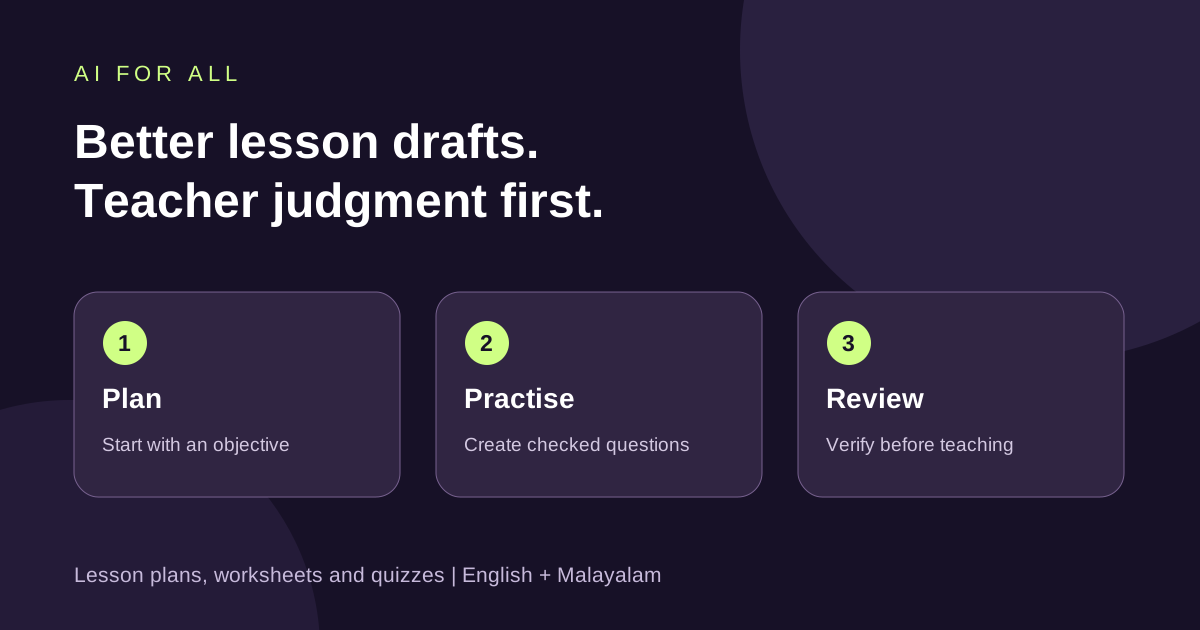
AI can help a teacher turn a learning objective into a lesson outline, practice questions or a simpler explanation. Its most useful role is preparing a draft that you can inspect, adapt and teach confidently. Your syllabus, knowledge of the class and professional judgment guide the final resource.
This guide is designed for teacher-led preparation. It includes an illustrative 40-minute lesson, a checked five-question quiz, and English and Malayalam prompts. These are original teaching examples, not an official SCERT, NCERT, CBSE or ICSE lesson or a guarantee of curriculum alignment.
Start with a teaching goal
“Make a lesson on fractions” leaves too much open. Give the assistant the class level, exact objective, time available, language, prior knowledge and permitted source extract. Describe constraints such as a blackboard-only classroom or pupils sharing materials.
| Preparation task | How AI may help | Teacher’s check |
|---|---|---|
| Lesson planning | Suggest a sequence, examples and questions. | Does it teach the intended objective within the time? |
| Worksheets and quizzes | Draft questions, answer keys and explanations. | Are the answers correct, questions unambiguous and marks consistent? |
| Language adaptation | Draft Malayalam explanations and a bilingual glossary. | Does terminology match the textbook and preserve the meaning? |
| Additional support | Offer shorter instructions, hints and alternative examples. | Do adaptations support learning without labelling pupils or lowering the objective unnecessarily? |
| Feedback | Suggest comments against a supplied rubric. | Are comments supported by the work and reviewed by a teacher? |
A six-step preparation workflow
- Choose one objective. Write what pupils should be able to explain or do, rather than only a chapter title.
- Provide approved material. Use a short extract you are permitted to process, your own notes or an authorised public resource. Preserve the source title and relevant page or section.
- Request an outline first. Ask for learning stages, timings, a misconception and a check for understanding. Correct the outline before generating a full worksheet.
- Adapt the draft. Use familiar examples, suitable language and materials actually available in the classroom.
- Solve and verify. Work through every question yourself, inspect the answer key and compare factual claims with the source.
- Teach, observe and revise. Record which question exposed a misunderstanding and what needed changing. Judge the whole preparation effort, including review time.
Prompt 1: build a lesson from trusted material
Act as a lesson-planning assistant. Class: [LEVEL]. Subject: [SUBJECT]. Objective: [ONE CHECKABLE OBJECTIVE]. Duration: [MINUTES]. Teaching language: [LANGUAGE]. Prior knowledge: [DETAILS]. Materials: [AVAILABLE MATERIALS]. Use only the approved extract below for factual content. First propose a timed outline with a starter, explanation, guided practice, independent practice and exit question. Identify a likely misconception. Flag missing information and do not claim board or textbook alignment unless supported by the extract. Source: [TITLE, PAGE AND PERMITTED EXTRACT].
Worked example: a 40-minute equivalent-fractions lesson
Illustrative class: a Class 6 group that already recognises a fraction as equal parts of the same whole. Objective: explain why 1/2, 2/4 and 3/6 represent the same amount, and form an equivalent fraction by multiplying numerator and denominator by the same positive whole number. Adjust the level and sequence to your actual syllabus.
| Minutes | Activity | Evidence of learning |
|---|---|---|
| 0–5 | Draw two equal-size rectangles. Divide one into halves and another into quarters; shade one half and two quarters. | Pupils explain what the shaded regions have in common. |
| 5–13 | Explain 1/2 = 2/4 = 3/6 using equal-size drawings. Connect this to multiplying both numerator and denominator by the same number. | Pupils describe the change in parts while the total amount stays equal. |
| 13–23 | Work together on 2/3 = 4/6 and 3/5 = 6/10. Ask why changing only the denominator generally changes the value. | Pairs justify the multiplier used. |
| 23–33 | Complete the five-question practice set below. Ask for a short explanation on the final two items. | The teacher checks both answers and reasoning. |
| 33–38 | Discuss errors. Revisit the idea that all comparisons use the same-size whole. | Pupils correct an explanation, not just copy an answer. |
| 38–40 | Exit question: give one fraction equivalent to 2/5 and explain the operation. | For example, 4/10 because both terms were multiplied by 2. |
Misconception to address: a larger denominator does not automatically mean a larger fraction. When the numerator is 1 and the whole is the same size, 1/4 is smaller than 1/2 because it represents one of four smaller equal parts.
A checked five-question quiz
This is an original illustrative quiz, not a live AI response. Award one mark per question, five marks in total. For questions 4 and 5, require the stated explanation for the mark.
- Fill the blank: 1/2 = [ ? ]/8.
- Fill the blank: 2/3 = 6/[ ? ].
- Which equals 3/4: 6/8 or 3/8?
- True or false: 2/4 and 3/6 are equivalent. Explain.
- A pupil writes 1/2 = 1/4 because the denominator was multiplied by 2. Correct the statement and explain what must change.
Teacher’s answer key and explanations
- 4. Multiply numerator and denominator of 1/2 by 4 to obtain 4/8.
- 9. Multiply both terms of 2/3 by 3 to obtain 6/9.
- 6/8. Both terms of 3/4 are multiplied by 2.
- True. Both fractions equal 1/2. Accept a correct same-whole drawing or another valid explanation.
- 1/2 = 2/4. Both numerator and denominator must be multiplied by 2 to retain the same value.
Prompt 2: create a worksheet with a checkable key
Create a [NUMBER]-question worksheet on [OBJECTIVE] for [LEVEL], using only [APPROVED MATERIAL]. Include recall, application and explanation questions. Give marks for each question and a correct total. Put a separate teacher answer key after the worksheet, with workings and acceptable alternatives. Avoid trick questions and ambiguous wording. Flag uncertainty instead of inventing facts. I will solve and check every item before classroom use.
Teach in English and Malayalam
Ask for translation after the subject explanation is correct. Specify the terminology in your school textbook and review Malayalam spelling, naturalness and mathematical or scientific meaning. A fluent translation can still alter a concept.
Prompt 3: bilingual adaptation
Adapt this teacher-approved explanation for [CLASS] into clear English and natural Malayalam. Preserve every number, symbol and learning objective. Keep these textbook terms: [TERMS]. Return English and Malayalam in separate sections, followed by a small bilingual glossary. Flag terms needing teacher review and do not add outside facts. Explanation: [CHECKED TEXT].
മലയാളം പ്രോംപ്റ്റ്: പാഠപദ്ധതി
ആറാം ക്ലാസിലെ വിദ്യാർത്ഥികൾക്ക് തുല്യഭിന്നങ്ങൾ പഠിപ്പിക്കാൻ 40 മിനിറ്റിന്റെ പാഠപദ്ധതിയുടെ കരട് തയ്യാറാക്കുക. നൽകിയിരിക്കുന്ന അംഗീകൃത പാഠഭാഗം മാത്രം ഉപയോഗിക്കുക. പഠനലക്ഷ്യം, സമയക്രമം, ബോർഡിൽ വരയ്ക്കാവുന്ന ഉദാഹരണങ്ങൾ, പരിശീലന ചോദ്യങ്ങൾ, ഉത്തരസൂചിക എന്നിവ നൽകുക. ഒരേ വലിപ്പമുള്ള മുഴുവൻ ഭാഗങ്ങളാണ് താരതമ്യം ചെയ്യുന്നതെന്ന് വ്യക്തമാക്കുക. ലഭ്യമല്ലാത്ത വിവരങ്ങൾ സൃഷ്ടിക്കരുത്. പാഠഭാഗം: [വിവരങ്ങൾ ചേർക്കുക].മലയാളം പ്രോംപ്റ്റ്: ചോദ്യങ്ങളും ഉത്തരങ്ങളും പരിശോധിക്കുക
താഴെയുള്ള ചോദ്യങ്ങളും ഉത്തരസൂചികയും പരിശോധിക്കുക. കണക്കിലെ പിശകുകൾ, അവ്യക്തമായ വാക്കുകൾ, ഒന്നിലധികം ശരിയുത്തരങ്ങൾ, മാർക്കിന്റെ ആകെ തുക എന്നിവ പരിശോധിച്ച് കണ്ടെത്തലുകൾ പട്ടികയായി നൽകുക. നൽകിയ പാഠഭാഗത്തിൽ നിന്ന് ഉറപ്പാക്കാനാവാത്ത വിവരങ്ങൾ വ്യക്തമാക്കുക. ഇത് അധ്യാപകന്റെ സ്വതന്ത്ര പരിശോധനയ്ക്ക് സഹായിക്കുന്ന കരട് മാത്രമാണ്. ചോദ്യങ്ങൾ: [ചേർക്കുക]. ഉത്തരസൂചിക: [ചേർക്കുക].Choose a tool by the task
- A chat assistant: useful for drafting a sequence, alternative explanation or quiz from material you provide. Tool features and accounts differ; check the output against your sources.
- A source-based research assistant: useful for questions about approved reference material. Inspect citations in the original document and keep external research separate from a source-only exercise.
- A presentation or design tool: useful after the content is checked, for organising a worksheet or visual explanation. Verify diagrams, labels, contrast and export quality.
You can start with an accessible free text workflow; this guide requires no paid subscription. External services may require accounts, impose limits or restrict use by age, school policy, region or administrator settings. See the tool finder for options and our presentation guide for the design stage.
Protect pupils and keep assessment fair
- Use fictional or properly de-identified examples. Do not upload names, photographs, marks linked to names, health or disability information, contact details or disciplinary records to an unapproved service.
- Removing a name may not be enough if a rare incident or other details identify the pupil.
- Follow the school’s approved tools, data rules, copyright permissions and any required consent process. Teacher-led preparation need not require pupils to create AI accounts.
- Use AI feedback as a draft. Teachers should check the evidence, apply the rubric and retain responsibility for marks and consequential decisions.
- Give pupils clear rules on permitted AI assistance and access to a workable alternative when a tool is unavailable.
- Review language, cultural assumptions and accessibility. Do not infer ability or learning needs from an AI-generated profile.
UNESCO’s guidance emphasises human agency, privacy and age-appropriate educational use. Its guidance is a framework for responsible use, not a substitute for your institution’s policies or applicable requirements. Read UNESCO’s guidance.
Does AI actually save preparation time?
An EEF-funded trial of ChatGPT with implementation guidance for Key Stage 3 science planning reported average weekly preparation time of 56.2 minutes versus 81.5 minutes in the comparison group, about a 31% reduction. Resource-quality review found no apparent difference in the sampled materials. These are findings from a particular teaching setting, not a promised saving or proof of improved pupil attainment. Measure your own drafting and checking time. EEF trial findings and limitations.
Before using the resource in class
- Objective and examples match the approved syllabus and class level.
- Facts, diagrams, calculations, answer keys and mark totals have been checked independently.
- Lesson timings add up and required materials are available.
- English and Malayalam versions preserve the same meaning.
- No unnecessary pupil information is included.
- The teacher can explain the material and adapt it without the AI tool.
Start small: prepare one five-question quiz for a lesson you already teach. Check it, use it and record what helped. Expand only when the complete workflow improves preparation at an acceptable quality.
Prepared and sources checked 15 November 2026. Examples and prompts are authored educational material. Classroom suitability and final approval remain with the teacher.