How to Learn Languages Using AI: A Practical Study Guide
Use AI as a conversation partner, vocabulary coach and writing tutor—with copy-ready prompts, a 15-minute routine and practical accuracy checks.
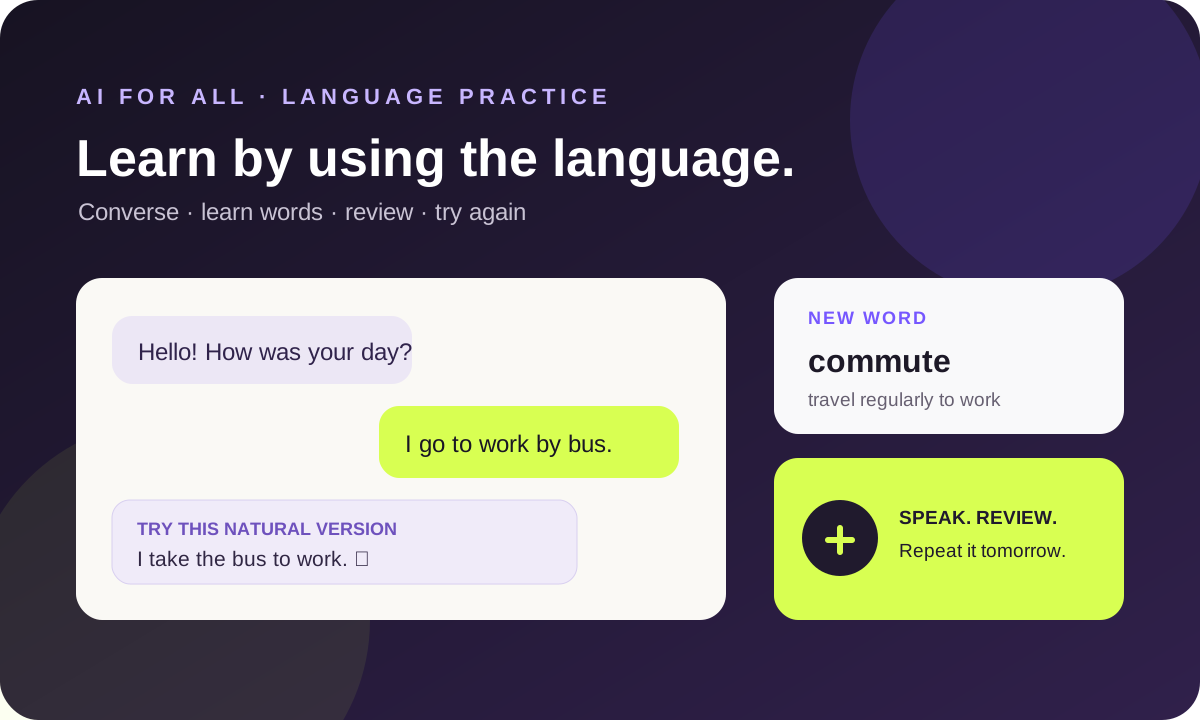
Learning a language takes regular practice: listening, speaking, reading, writing and remembering words in context. AI can make it easier to practise between lessons by acting as a conversation partner, vocabulary coach and writing assistant.
The best results come from short, specific exercises. Tell the AI your level and goal, answer in the language you are learning, and ask it to explain corrections. Treat its output as practice material; check important grammar, pronunciation and usage with reliable references or a fluent speaker.
Ways to use AI while learning a language
| Practice area | How AI can help | What to check |
|---|---|---|
| Conversation | Role-play a café, travel, work or everyday situation and ask one question at a time. | Whether the phrase sounds natural in the region and setting you care about. |
| Vocabulary | Explain words in context, give example sentences and quiz you on recall. | Meaning, register, collocations and whether a word is formal, informal or regional. |
| Grammar | Explain a rule using simple examples, then prepare a short exercise. | Exceptions and context; ask for a reference when the distinction matters. |
| Writing | Review a paragraph, mark corrections and explain recurring errors. | That the edited version preserves your meaning and voice. |
| Listening and pronunciation | Where the tool supports audio, practise listening or get feedback on a spoken phrase. | Audio feedback may miss accents or sounds. Compare with trusted recordings and fluent speakers. |
Start with a 15-minute routine
- Choose one goal (2 minutes): for example, introduce yourself, order a meal or describe your work.
- Learn a few useful phrases (4 minutes): ask for meanings and examples suited to your level.
- Practise a dialogue (5 minutes): answer in the language you are learning. Ask the AI to wait for each answer.
- Review corrections (3 minutes): choose one or two repeated errors and write the corrected forms yourself.
- Recall without help (1 minute): close the chat and say or write what you remember.
Use the same topic again a few days later. Remembering a phrase without looking is more useful than repeatedly rereading a long list.
Copy-ready prompts for language practice
1. Set up a personal tutor
Act as my language practice tutor. I am learning [language] and my current level is [beginner/intermediate/advanced]. My first language is [language]. My goal is [goal]. Give me a 10-minute exercise. Use clear, natural language at my level, ask one question at a time and wait for my answer. Correct important errors kindly and explain them briefly. Do not invent grammar rules; tell me when you are unsure.
2. Practise a real-life conversation
Role-play a [situation] with me in [language]. I am at [level]. Stay in character and ask one short question at a time. Let me answer before continuing. After each answer, show a corrected version only when needed and explain one useful improvement. Give a translation only if I ask for it.
3. Learn vocabulary in context
Teach me five useful [language] words for [topic]. For each word, give a simple meaning, one natural example sentence and a note on whether it is formal, informal or regional. Then quiz me one word at a time without showing the answer first. Avoid rare or outdated expressions.
4. Improve a short piece of writing
Review my [language] writing for a [level] learner. First show my original text. Then provide a corrected version and a short table with: original phrase, suggested correction and reason. Preserve my meaning and tone. Separate required grammar corrections from optional style changes. Text: [paste a short practice paragraph]
5. Understand a grammar point
Explain [grammar point] in [language] using simple terms for a [level] learner. Give three short examples and one common mistake. Then give me five questions, one at a time. Check each answer and explain the reason. If there are regional or context-based differences, point them out.
Use AI to practise English or Malayalam
If you speak Malayalam and are learning English, practise familiar situations such as introducing yourself, explaining your work or asking for directions. Ask for a natural English version and a short explanation of the phrases that differ from a direct Malayalam translation.
If you are learning Malayalam, ask the tutor to use simple sentences and explain unfamiliar words. Malayalam has regional variation and different levels of formality; specify whether you want standard written Malayalam or a particular conversational context. A fluent speaker can help confirm whether a phrase sounds appropriate.
How to get better results
- State the target language, your level and what you want to do with it.
- Keep each practice session focused on one setting or skill.
- Ask for one correction at a time instead of a complete rewrite.
- Try to answer from memory before asking the AI to reveal a translation.
- Save useful phrases with the situation in which you would use them.
- Use audio only when available and useful, and compare pronunciation advice with trusted recordings or a fluent speaker.
Limitations and safe use
AI can produce a confident but inaccurate translation, grammar explanation or pronunciation tip. It may miss idioms, humour, cultural context and regional usage. For exams, formal documents or important conversations, verify the wording with a qualified teacher, fluent speaker or trusted reference.
Use fictional or non-sensitive examples for practice. Do not paste private messages, personal records or confidential work material into an AI service unless you are authorised to do so and have checked the service’s data-handling terms.
A simple way to measure progress
Once a week, repeat a short speaking or writing task on a familiar topic. Keep the prompt and compare your own work over time: Can you communicate the main idea? Do you need fewer translations? Are the same errors appearing less often? Use AI feedback as one indicator, not a formal language score.
AI works best here as a patient practice partner. Regular effort, meaningful input and feedback from trustworthy sources remain central to learning.