How to Spot AI Scams, Deepfakes and Fake WhatsApp Messages
Recognise AI-enabled impersonation, verify urgent requests and protect payments. Includes fictional examples, a family checklist, safe prompts and India’s official cyber-fraud reporting channels.
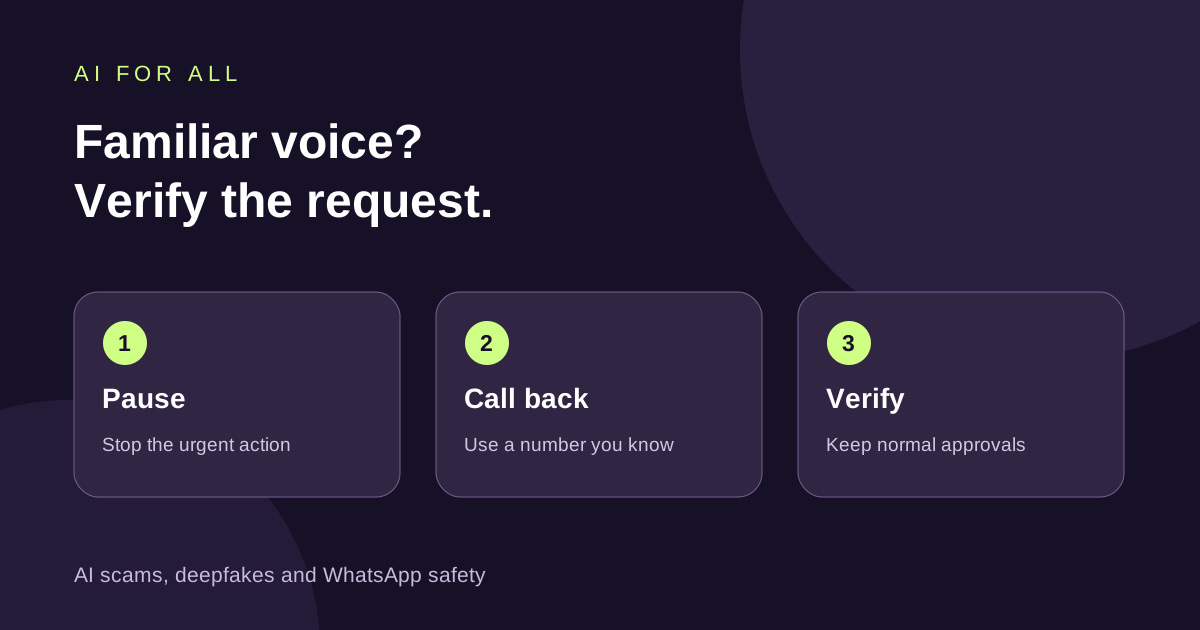
A familiar voice asks for an urgent transfer. A video appears to show a public figure endorsing an investment. A WhatsApp message uses your colleague’s photograph and asks you to pay a new bank account. AI can make impersonation convincing, but you can protect yourself by checking the request through a channel you already trust.
A realistic voice, face, logo or profile picture does not establish identity. Do not let urgency replace your usual checks. If money has already been lost, contact your bank promptly and follow the India reporting steps below.
What are deepfakes and AI-enabled scams?
A deepfake is AI-generated or manipulated audio, video or imagery that can make someone appear to say or do something they did not. Voice cloning can imitate aspects of a person’s speech. AI can also help produce convincing messages or fake documents. Such technology has legitimate creative uses; deception is the problem.
Not every suspicious message uses AI. Stolen photographs, compromised accounts, edited clips and ordinary impersonation can create similar risks. You do not need to prove how a message was produced before deciding to pause a payment or verify a claim.
Five situations worth checking
The following are fictional examples for awareness, not reports of identified incidents.
| Situation | What should make you pause? | Safer response |
|---|---|---|
| “Your child is in trouble—pay now.” | Emotional pressure, secrecy and an unfamiliar payment destination. | End the call and contact the person on a saved number. Try another trusted family member if needed. |
| A “director” requests an urgent supplier payment. | A new account, a bypassed approval or a request to avoid colleagues. | Use the established approval process and verify the change with the known supplier contact. |
| A celebrity video promises guaranteed investment returns. | Pressure to join a chat group, transfer funds or install an unfamiliar app. | Check the original publisher and the relevant regulator’s records independently. An endorsement is not proof of legitimacy. |
| A “refund” message asks for your UPI PIN. | A request to authorise a payment while claiming you will receive money. | Read the payment screen. Receiving a normal UPI transfer does not require entering your UPI PIN. |
| A forwarded news clip urges immediate sharing. | No original link, unclear date or a caption that tells you what to believe. | Find the original publication and check its date and full context before sharing. |
A practical verification routine
- Stop the requested action. Do not transfer funds, disclose codes, install an app or forward the content while checking.
- Leave the supplied contact route. Call a number from your existing records or open an official app or website yourself. A number or link in the suspicious message is not independent verification.
- Check the exact claim. Ask whether the person made this request, whether the account changed and whether the amount and purpose are correct. A genuine-looking account can also be compromised.
- Check the source and context. For public content, locate the original publisher, full recording and publication date. A genuine old clip can acquire a misleading new caption.
- Keep the usual approval. Businesses should retain documented verification and payment approval, including when the requester sounds like a senior colleague.
The FTC recommends calling the supposed relative using a known number when a voice-cloning emergency scam is suspected. India’s CERT-In also recommends source verification and callback procedures for sensitive requests. FTC guidance · CERT-In advisory.
Can you tell from the face or voice alone?
Unnatural lip movement, inconsistent lighting or unusual speech may justify closer inspection. They are clues, not a dependable test: compression and poor connections can also create glitches, while convincing synthetic media may have no obvious visible flaw.
Reverse-image search can reveal an earlier appearance or misleading reuse. An AI detector may provide a lead, but treat its result as uncertain rather than a verdict. Do not authorise a payment because a detector calls a clip genuine, and do not accuse someone solely because it calls a clip synthetic. Independent confirmation of identity and the request remains essential.
Check WhatsApp and payment requests carefully
- A familiar name, photo or group membership does not verify the sender or the request.
- Do not share OTPs, UPI PINs, banking passwords or account-registration codes with a caller or chat contact.
- Reject unsolicited requests to install APKs, screen-sharing tools or remote-access apps to obtain a refund or “fix” an account.
- Read the payee and amount before approving any transaction. A QR code is a data carrier, not a certificate of safety.
- NPCI warns about refund and cashback messages that persuade users to scan a QR code and enter a PIN to make a payment. Merely opening your banking app does not itself approve a transfer. NPCI fraud-awareness guidance.
If money or account access has already been lost in India
- Contact the bank or payment provider immediately through its official app, website or verified number. Report the transaction and ask about blocking affected payment channels or securing the account.
- Call 1930 for financial cyber fraud and report at cybercrime.gov.in. Follow the official instructions and retain the acknowledgement. Do not delay reporting while trying to determine whether AI was involved.
- Preserve evidence: transaction references, amounts, dates, phone numbers, relevant URLs, original messages and screenshots. Avoid deleting the conversation before retaining what investigators may need.
- Secure affected accounts using a trusted device and official recovery routes. Review active sessions and change compromised credentials; seek qualified assistance if remote access or malicious software is suspected.
- Warn affected contacts and report the impersonation through the platform’s official process. Share only what they need to protect themselves.
Official MHA guidance identifies 1930 and the National Cybercrime Reporting Portal as reporting channels. Prompt reporting can support attempts to interrupt the movement of funds; it does not guarantee recovery. Do not pay someone who promises a guaranteed refund or claims a recovery fee is required through a private account. MHA reporting information.
Use AI for awareness, with clear boundaries
You can ask an assistant to explain pressure tactics in a redacted message. It cannot authenticate a caller or confirm ownership of a bank account from the message alone. Do not upload private recordings, identity documents, full bank details or evidence containing other people’s personal information to an unapproved service.
Prompt: inspect a suspicious message
Review this redacted message for urgency, secrecy, impersonation, requests for credentials and unusual payment instructions. Explain what needs independent verification. Do not declare it genuine or fraudulent without evidence, click links, identify a person or contact anyone. Return a short checklist. Message: [REDACTED TEXT].
Prompt: make a family awareness note
Create a short, calm family WhatsApp reminder in English and Malayalam: pause before sending money, call back using a saved number, never share OTPs or UPI PINs, and use official reporting channels if financial fraud occurs. Do not invent incidents or include clickable payment links.
ശബ്ദവും മുഖവും പരിചിതമാണെന്ന കാരണത്താൽ മാത്രം പണം അയക്കരുത്. കോൾ അവസാനിപ്പിച്ച് നിങ്ങൾക്ക് നേരത്തെ അറിയാവുന്ന നമ്പറിൽ തിരികെ വിളിച്ച് ഉറപ്പാക്കുക. OTP, UPI PIN എന്നിവ ആരുമായും പങ്കിടരുത്. സാമ്പത്തിക സൈബർ തട്ടിപ്പ് സംഭവിച്ചാൽ ബാങ്കിനെ ഉടൻ അറിയിക്കുക; 1930-ൽ വിളിക്കുകയും cybercrime.gov.in-ൽ പരാതി നൽകുകയും ചെയ്യുക.
Try a two-minute safety exercise
A fictional colleague sends: “I am in a meeting. Transfer ₹25,000 to this new account immediately and do not call.” Identify three warning signs, choose an independent callback route and state who must approve the payment. A sound response pauses the transfer, verifies the request outside the message and retains the normal approval process.
Questions readers often ask
Does a video call prove identity?
No single visual cue proves who is controlling the conversation. For a consequential request, use independent confirmation and the established authorisation process.
Should I forward the suspicious clip to warn everyone?
Avoid spreading a potentially misleading clip or private material. A text warning and an official advisory are often more useful; preserve evidence privately for reporting.
Must I prove that AI was used before reporting?
No. Report the suspected fraud and provide the facts and evidence you have. Leave technical attribution to the appropriate investigators.
Sources checked 15 November 2026. This is a public awareness guide; examples are fictional and no detection or recovery outcome is guaranteed.